How to Handle Difficult Customers (Simple & Professional)
How to Handle Difficult Customers
GMJ
11/28/20251 min read
How to Handle Difficult Customers (Simple & Professional)
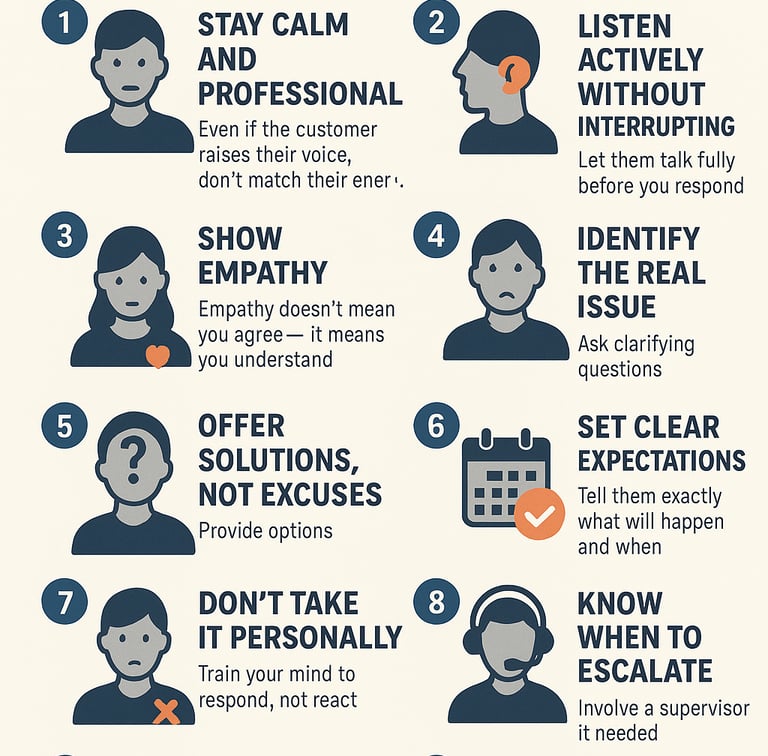
1. Stay Calm and Professional
Even if the customer raises their voice, don’t match their energy.
Your calm tone helps de-escalate the situation and shows confidence.
Tip: Take a deep breath, speak slowly, and maintain a steady tone.
2. Listen Actively Without Interrupting
A difficult customer often wants to feel heard.
Let them talk fully before you respond.
Use phrases like:
“I understand your concern.”
“Let me make sure I have this right…”
3. Show Empathy
Empathy doesn’t mean you agree — it means you understand.
Example:
“I can imagine how frustrating this must be. Let’s fix it together.”
4. Identify the Real Issue
Sometimes the customer is angry about one thing but complaining about another.
Ask clarifying questions:
“Can you walk me through what happened?”
“When did the issue start?”
5. Offer Solutions, Not Excuses
Customers want results more than explanations.
Provide options:
“Here’s what I can do right now…”
“We have two ways to fix this — which one works best for you?”
This shifts the conversation from frustration to resolution.
6. Set Clear Expectations
Tell them exactly what will happen and when.
Example:
“You will receive a callback within 20 minutes.”
“Your issue will be resolved today.”
Clear timelines reduce anxiety.
7. Don’t Take It Personally
Most customers are frustrated at the situation, not you.
Train your mind to respond, not react.
8. Know When to Escalate
If the situation gets too heated, disrespectful, or beyond your authority, involve a supervisor.
Example:
“I want to make sure this is handled correctly. Let me bring in my supervisor who can help further.”
9. Always End on a Positive Note
Thank them for their patience and reassure them.
Example:
“Thank you for giving us the chance to fix this. I’m here if you need anything else.”
Quick Cheat Sheet for Agents (Copy & Use)
Stay calm
Listen first
Acknowledge feelings
Ask questions
Offer solutions
Give timelines
Don’t argue
Escalate if needed
Close with appreciation
Contact
Address : 802 Lake City, Lahore, Pakistan
Gmj@csgmj.online
© 2025. All rights reserved. GMJ
Phone :+923144767279
Reach us anytime, day or night. We start our work once you are ready